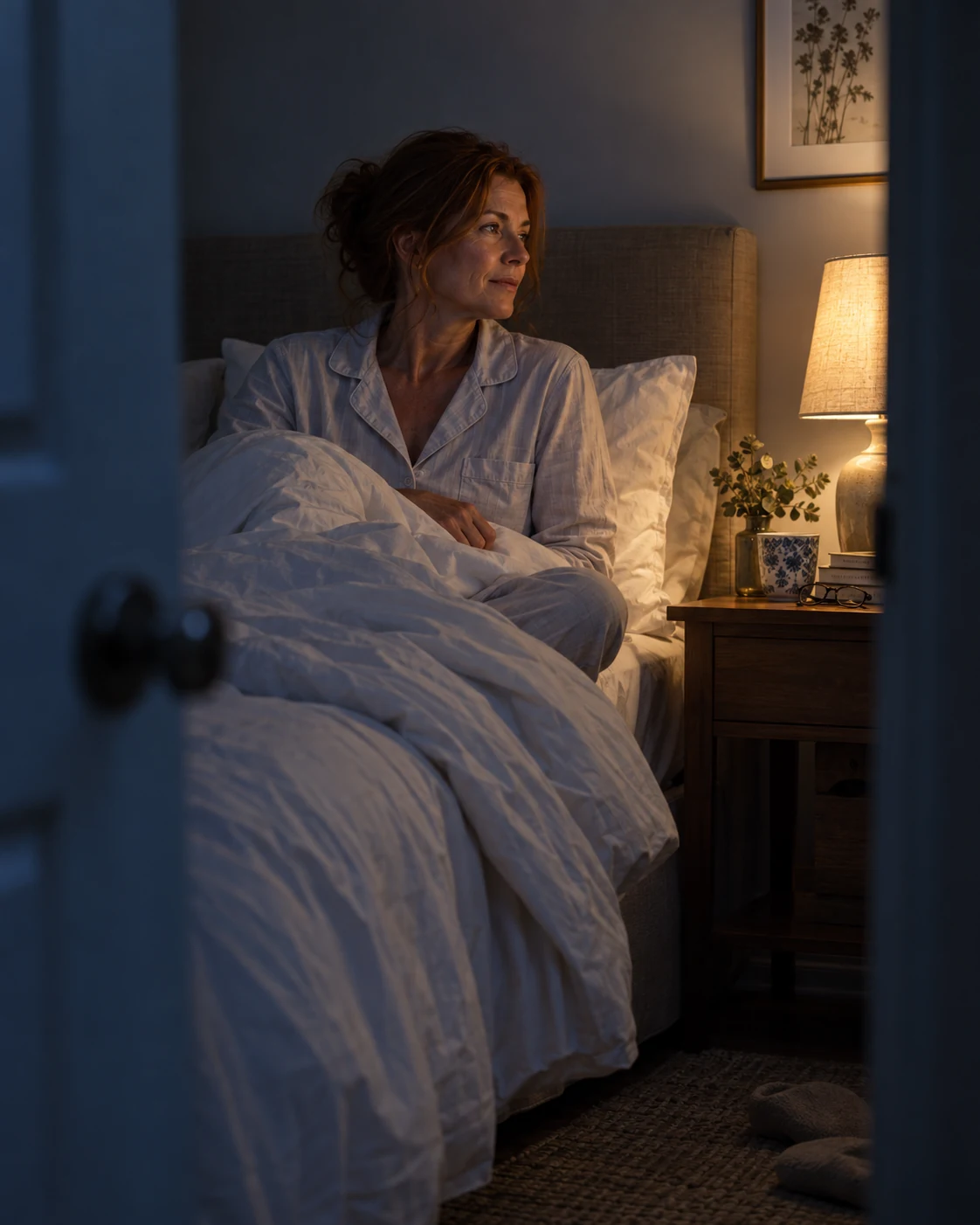
What can take you by surprise is everything around them: wet pyjamas, damp sheets, getting cold afterwards, and trying to fall asleep again once you're fully awake.
1 - The room can already be cold
At first, you do the obvious things.
Turn the thermostat down.
Open the window.
Put a fan beside the bed.
Sometimes the bedroom really was too warm, and that helps.
But you can also be lying in a cold room with the fan running and still wake up sweating.
Women talk about sleeping with the window open through winter and still having hot flashes during the night.
After a while, there isn't much colder you can make the room.
It's already cold.
The hot flash still happens.
2 - You can wake up completely soaked
"Hot" doesn't really cover it.
Sometimes you wake up and your pyjamas are wet through.
The sheet is damp.
Your hair is wet around your neck.
You have to get out of bed because lying there like that isn't an option.
That can mean changing your clothes.
Sometimes it means changing part of the bedding too.
And you're doing all of this when you were asleep 30 seconds ago.
3 - Then you can be freezing
This part catches a lot of people off guard.
A few minutes ago, you couldn't get the covers off quickly enough.
Then the hot flash passes.
Now you're wet.
Your skin is damp.
Your pyjamas are damp.
And suddenly you're cold.
So the covers come back.
You can go from throwing the duvet away from you to pulling it back over yourself in a surprisingly short amount of time.
That can happen more than once in the same night.
4 - Wet bedding becomes a 3am decision
There is a point where you find yourself standing beside the bed deciding how much laundry you are prepared to do right now.
Maybe the sheet only needs a towel over the wet patch.
Maybe you can move across the bed.
Maybe it is wet enough that you're changing everything.
At 3am, when you want nothing except to get back into bed, those are annoying decisions to be making.
That is why women end up keeping things nearby that they never imagined would become part of their sleep routine.
A towel.
Dry pyjamas.
Sometimes a spare sheet.
It's not glamorous, but it is useful.
5 - The hot flash can be over and you're still awake
Sometimes the heat itself passes fairly quickly.
The problem is that you are now fully awake.
You've got out of bed.
Changed clothes.
Turned the fan off or on.
Moved the covers around.
Possibly dealt with wet bedding.
Then you get back in and try to fall asleep again.
This is when looking at the clock becomes a bad idea.
You know you have to be up at 7.
Now it is 3:12.
Then 3:38.
The hot flash has gone.
You're still awake.
6 - You still have to get up the next morning
The next morning is when you really feel it.
The alarm still goes off.
You still have work, appointments, errands, or people who need something from you.
You can get through the day.
You may just be doing it tired, foggy, and with less patience than usual.
Then that evening you go back to bed hoping tonight is better.
That repeated loss of sleep is what makes the whole thing so exhausting.
It isn't only being hot for a few minutes. It is everything that gets interrupted around it.
7 - You get suspicious of anything called "cooling"
At first, the word sounds like exactly what you need.
Cooling pillow.
Cooling sheets.
Cooling topper.
Cooling pad.
And some of those products are genuinely nice to use.
The pillow may feel great when you first put your head down.
You may prefer the new sheets.
An active mattress system may genuinely help you.
But if you've already bought something specifically because you were waking with menopause night sweats and it didn't make the difference you hoped for, you read the next promise differently.
Especially when something feels impressive for the first few minutes and you're still awake again later.
After enough of that, "cooling" by itself doesn't tell you very much.
You want to know what the thing actually is and what the seller can honestly say about it.
Where this page stops
This page describes what women report about night sweats and the things they try. It cannot tell you what is happening in your own body.
If night sweats are disrupting your sleep, talk with a doctor. There are causes, and treatments, that a page about bedding cannot identify.
A note from Abri
The hot-then-cold part of a night sweat can also make the bedding awkward.
You get hot and push the duvet away.
Then you're damp and cold and want something over you again.
If the only thing available is the same heavier layer you just threw off, that is what you pull back on.
Some women use lighter layers so they have more than 2 choices: the whole duvet or nothing.
Abri is one option if what you want is simply a lighter blanket on the bed.
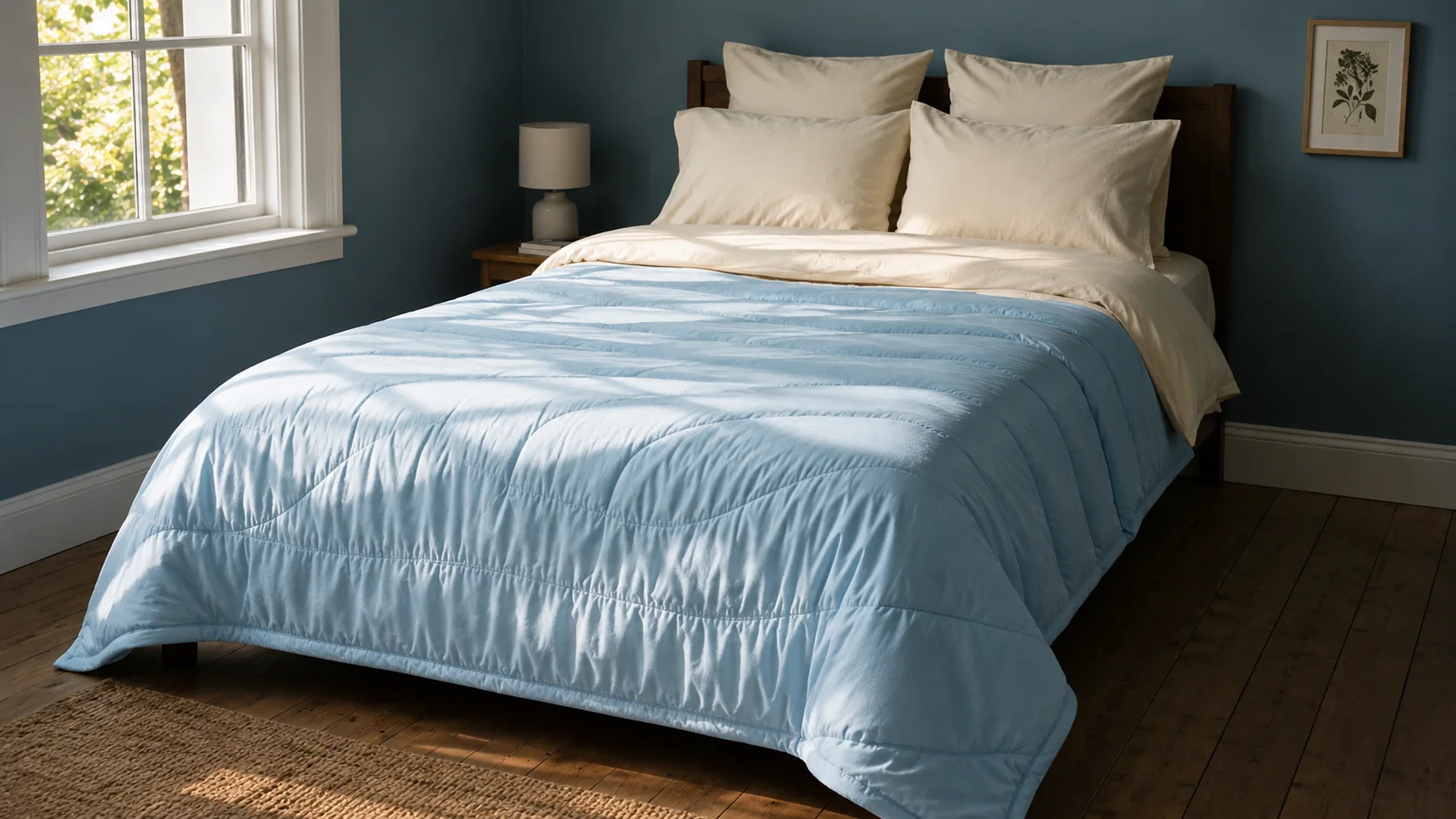
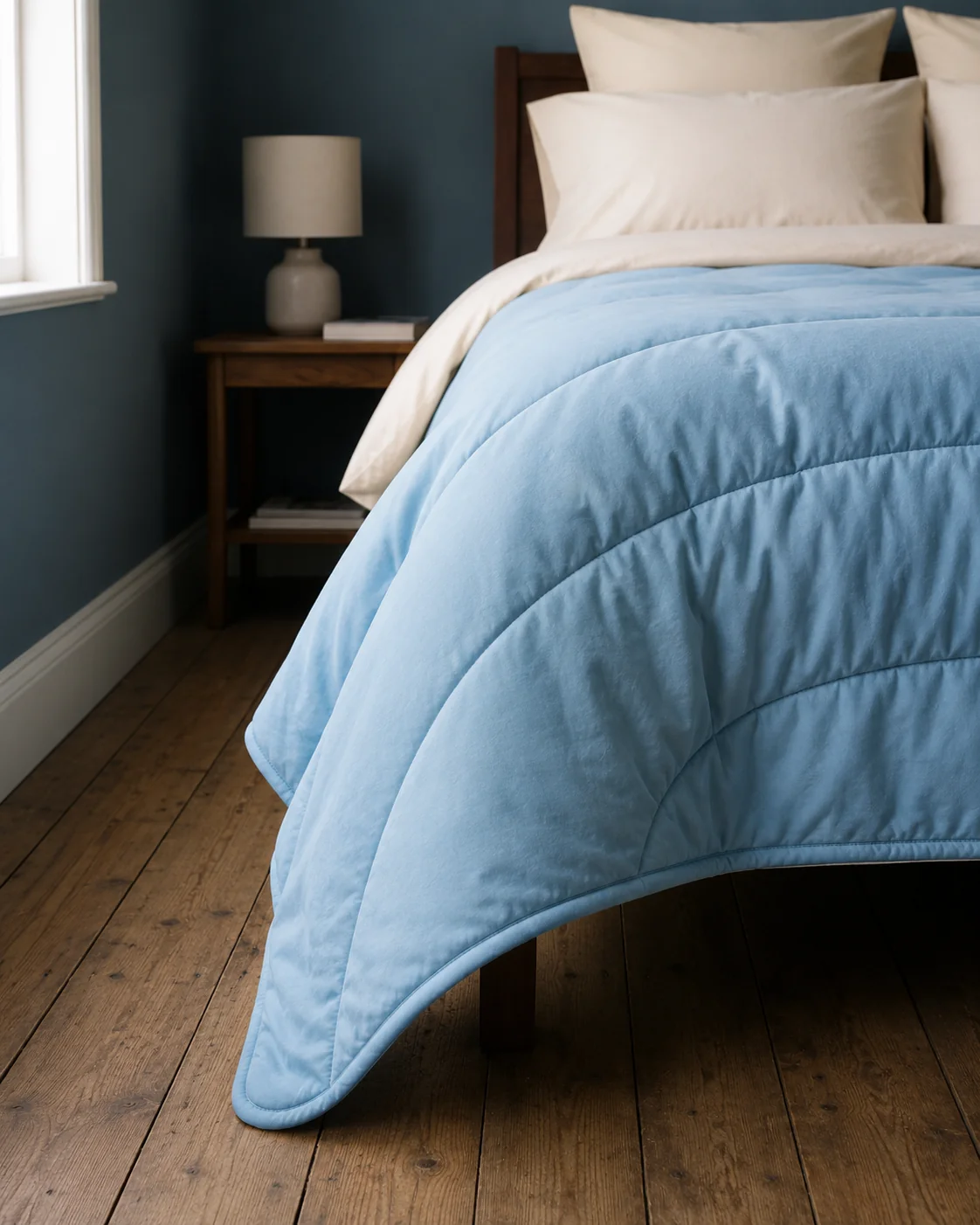
The Abri Cooling Blanket is a light, summer-weight blanket weighing about 1,180 g.
It is machine washable, comes in Sky Blue, and is available in 3 sizes:
150 x 200 cm
180 x 220 cm
200 x 230 cm
The smooth ice-silk surface gives the blanket its clean, soft finish.
A smooth surface and a light, summer-weight build give you an easy layer to settle under. Choose your size and try Abri in your own bed for 30 nights.
Abri is currently $79, down from $149 - 47% off.
Shipping is free, and delivery usually takes 1-2 weeks.
Every blanket comes with a 30-night sleep trial.
Sleep under it in your own bed. If it isn't right for you, send it back for a full refund.
We can tell you what the blanket is. We can't tell you whether you'll prefer sleeping under it.
The 30 nights are there so you can decide that yourself.