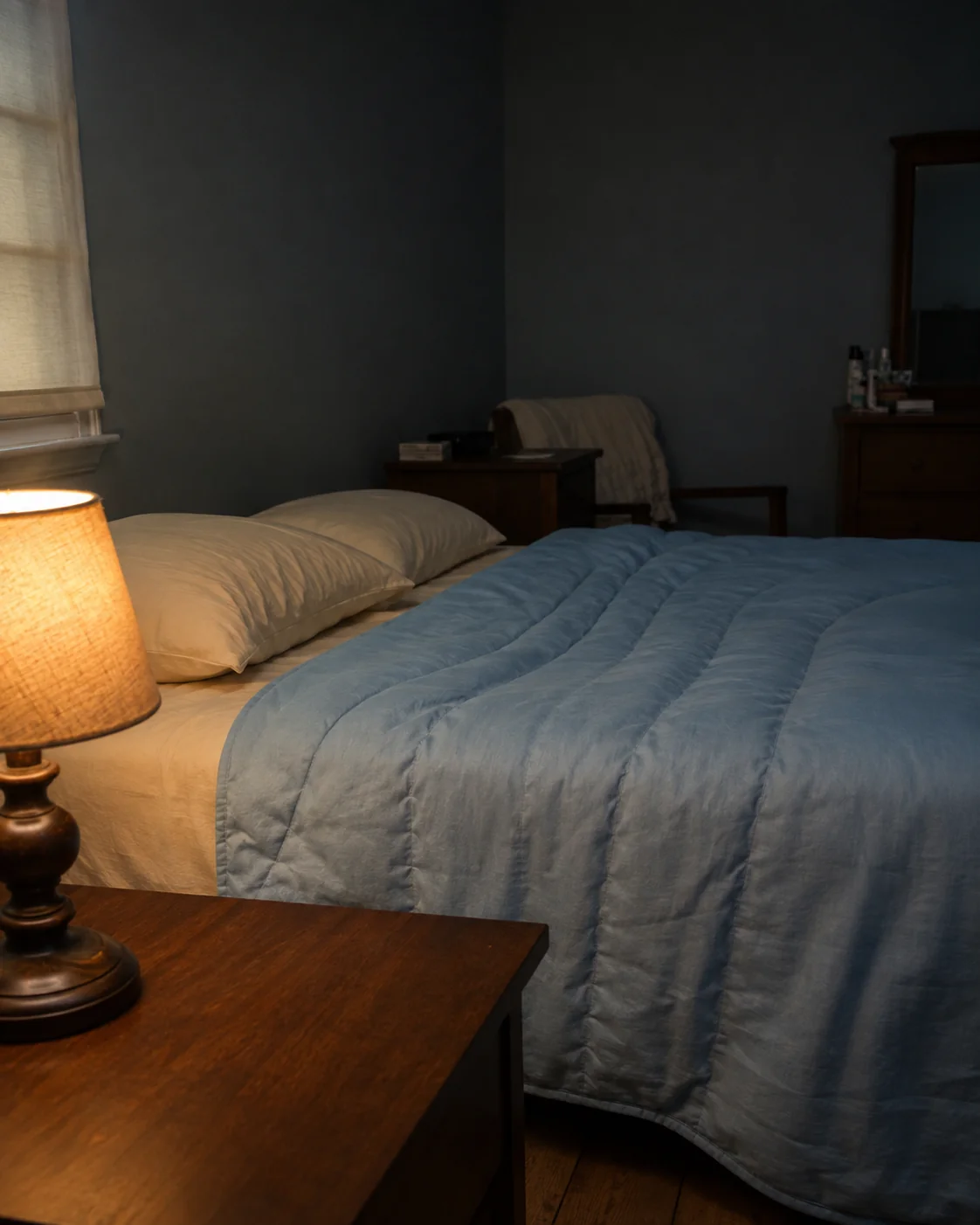
Waking up hot is not the same as going to bed too warm
You can feel comfortable when you get into bed and still wake later feeling too warm.
There are many reasons someone can wake up hot. This guide is about one part of that picture: the room and the bedding around you.
Your body temperature changes through the night
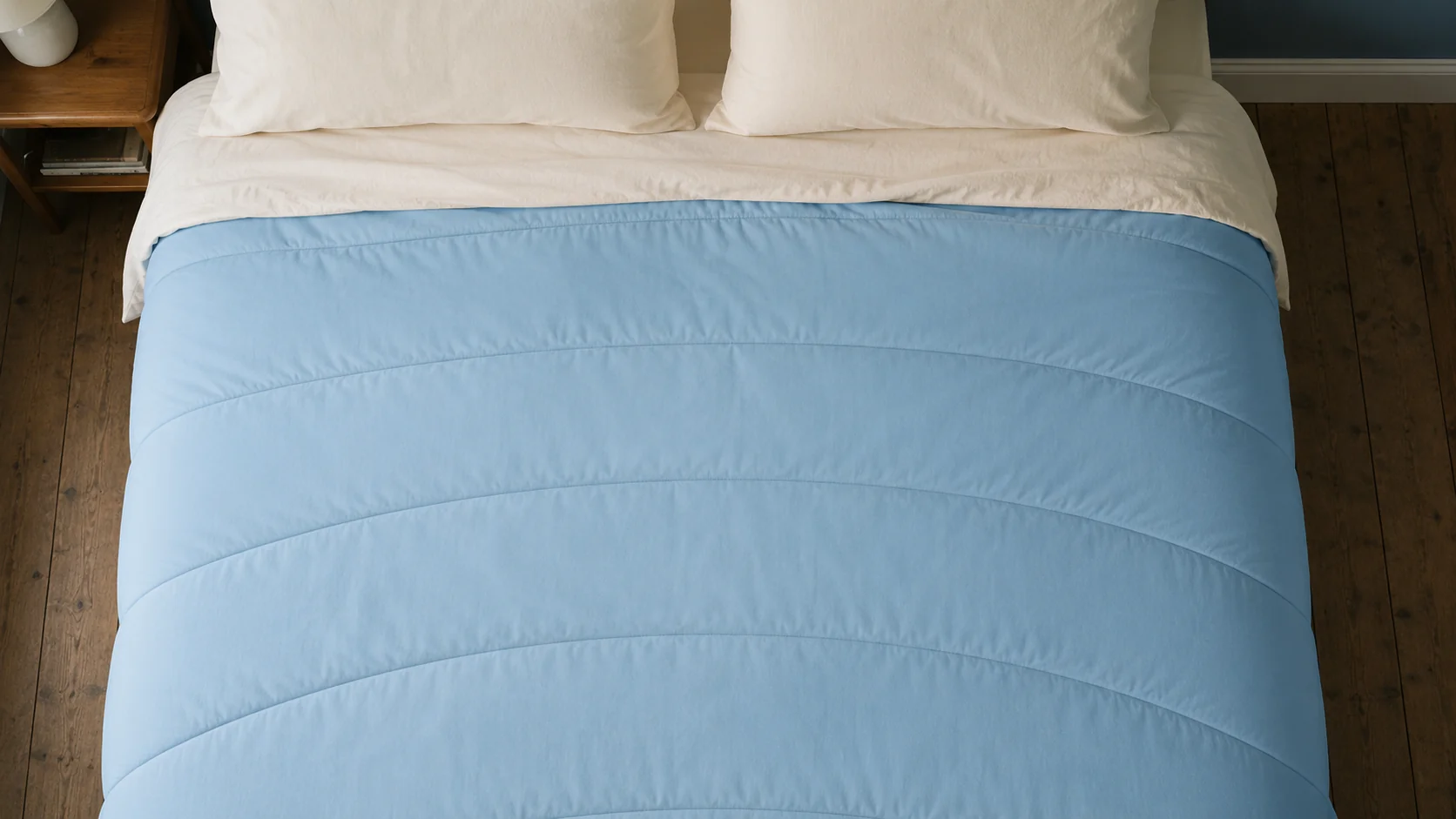
Your body temperature follows a daily rhythm. It begins to fall before sleep and stays lower through much of the night before rising again toward morning.
How your surroundings come into it
Part of that process involves releasing heat through your skin. The temperature around you, along with the bedding covering you, can affect that exchange.
That is why it can be useful to look at the room and the bed separately.
The room and the bedding do different things
The room
If the bedroom itself feels warm, that is an obvious place to start. Adjust the room until it feels comfortable and see whether that makes a difference.
The bedding
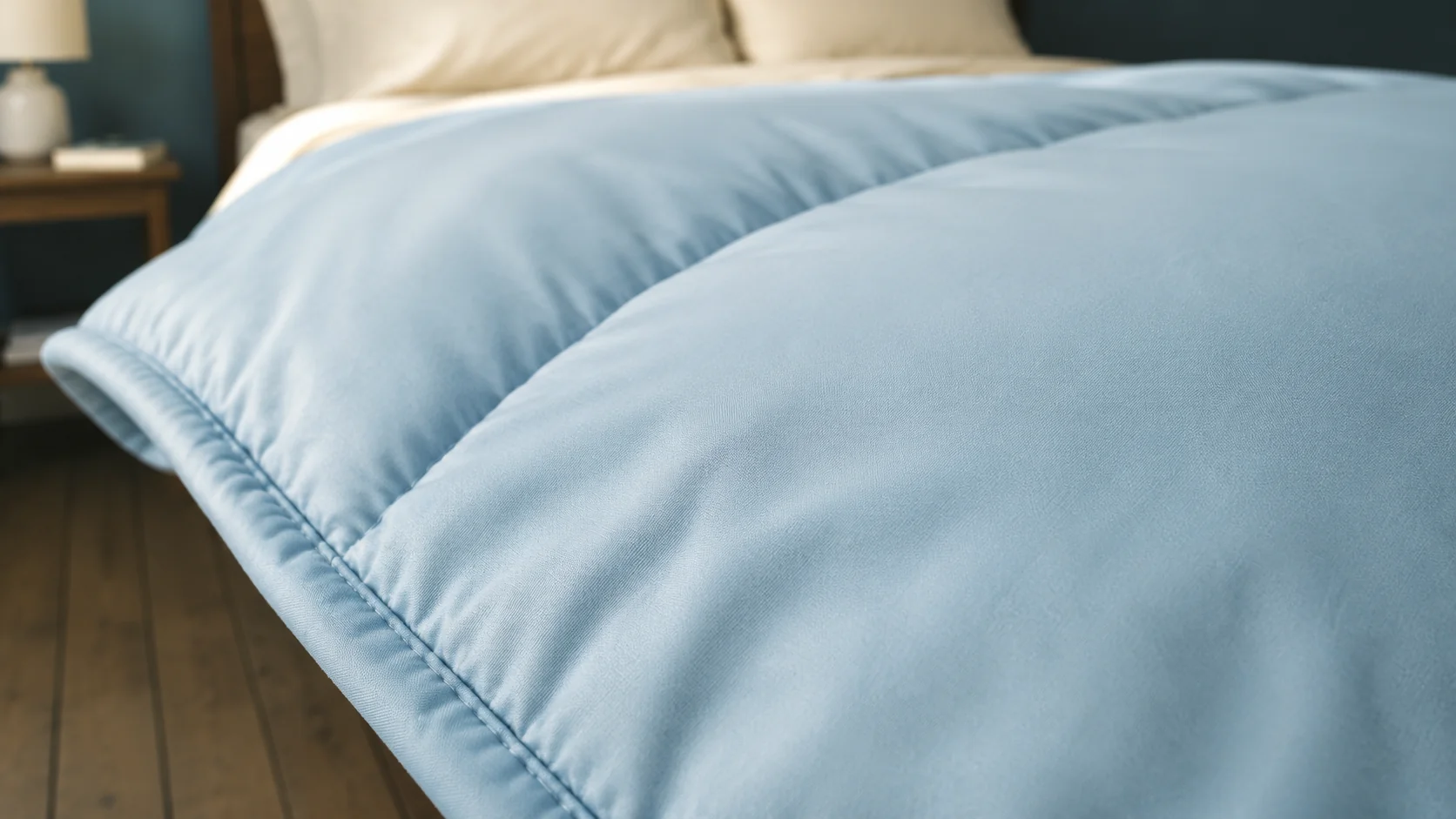
Blankets and comforters provide insulation. A thicker or warmer layer may be comfortable in one room or season and feel like too much in another.
If the room already feels comfortable and you still feel too warm under the covers, the bedding is another thing you can change.
Why being too warm can disturb sleep
Feeling too warm can make sleep harder to maintain. The thermal environment around you includes both the room and the bedding on the bed.
That does not mean every warm night has the same cause. It means the room and the bedding are two practical things you can check.
What to check
Is the room too warm?
If it is, try changing the room first and see what happens.
Does the room already feel comfortable?
If it does and you still feel too warm under the covers, try changing the amount or type of bedding instead.
Do you keep pushing the covers away?
If you regularly end up pushing the covers away, the amount of insulation on the bed may simply be more than you want. A lighter layer is one thing you can try.
Where this page stops
This guide can explain how the room and bedding affect your thermal environment. It cannot tell you why you personally wake up hot.
If waking hot keeps disrupting your sleep, especially if it is new or accompanied by other symptoms, talk with a doctor. There are causes that a bedding guide cannot identify.
Where Abri fits
If the room already feels comfortable but heavier bedding still feels too warm, Abri is a lighter, summer-weight option you can try at home for 30 nights.